REFRAME → BUILD → TEST → REFINE

TURNCOMPLEXITYINTO STRATEGY.
I turn ambiguous problems into usable systems.
Reframe. Build. Test against reality.
FOR THE PEOPLE BUILDING WHAT’S NEXT
DEEP TECH.
RARE
INSIGHT.
BotNews is where I publish the research you’ll explore here. As founder and editor-in-chief, I shape the stories, lead engineer-writers, and make highly technical ideas useful to the people building what’s next.
Explore BotNews botnews.ai
How to catch a world model lying to you.

A field guide to questioning generated futures. Work backward from the footage to the action—and find the frame where trust ends.
Read the full articleA READERSHIP ACROSS ROBOTICS, AI & SECURITY
Reader affiliations · not institutional endorsements

FROM UNDERSTANDING A WORLD TO ACTING IN IT
MOON
TOLOGY.
Rooted in DIU, U.S. Space Force, and NASA research, Moontology explores a practical problem in autonomy: how do we know a robot did what the system claims—and keep its actions within the authority it was given?
I’m developing a bridge between simulation and the physical world. dimOS connects a quadruped robot as the embodied layer; an articulated URDF model represents it in the 3D environment. Astra reasons through robotic scenarios, while the ontology connects observations, permissions, and outcomes so decisions can be checked against evidence.
Moontology.
A World Labs Gaussian-splat landscape.
Robots and task logic placed into the scene.
The original hackathon prototype.
Current focus: revocable task authority and independent verification of what a robot actually did.
Concept environment artworkThe work moves.
The context
should too.
I built TPLLM to carry the program context that teams keep reconstructing in meetings. It connects what was said, what changed in code, who owns the next step, and what the evidence actually supports.
Ontology and relational intelligence connect the evidence. Two intelligence lanes turn that context into bounded judgments and structured reasoning, with TPLLM policy governing what happens next.
Explore ontology & architecture Hosted dashboard · Vercel sign-in may be requiredA PROGRAM, OPENED UP
One program.
A connected world.
A conversation upstairs. A change in the code. A decision waiting for context. Scroll to open the model and follow what connects them.
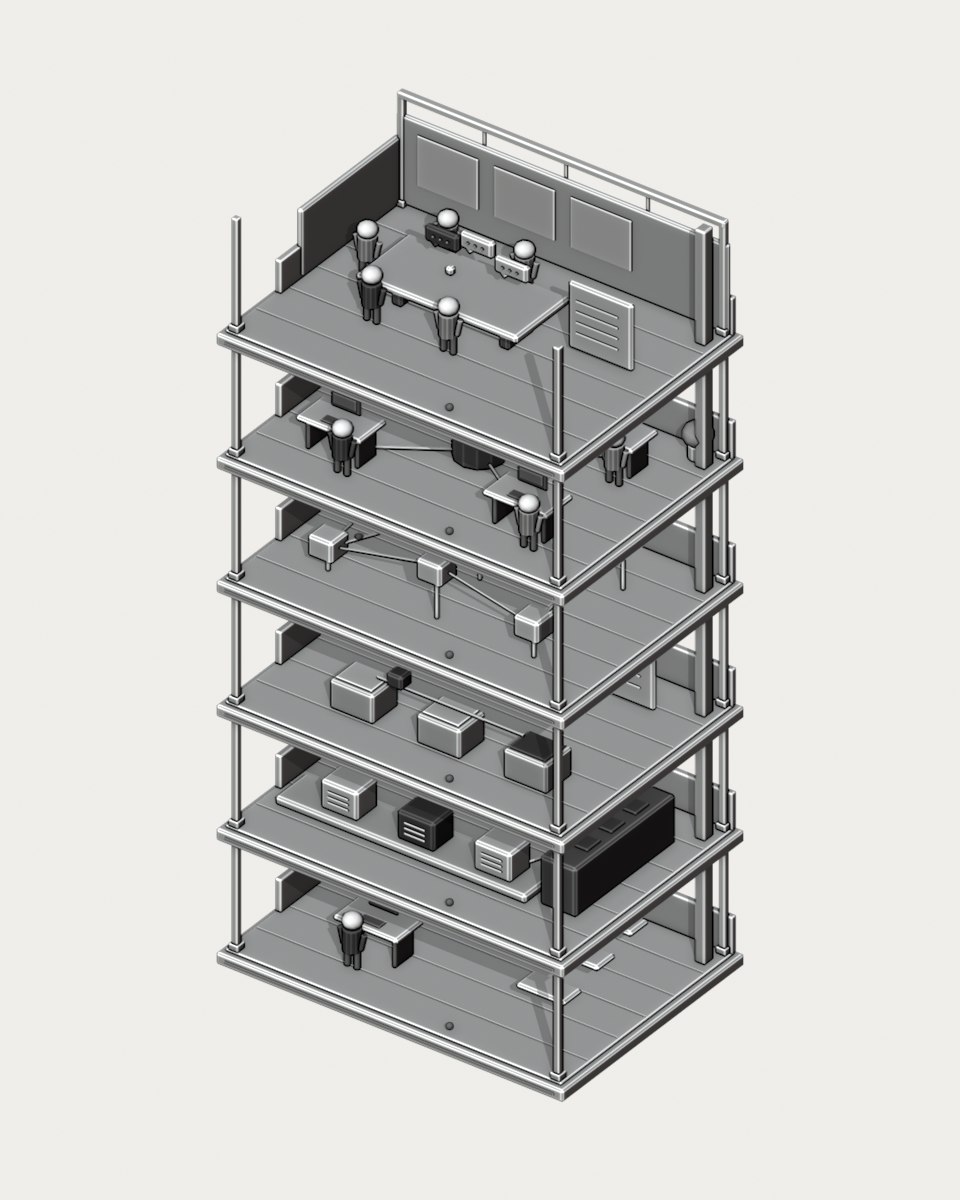
THE QUESTION BEHIND THE SYSTEM
What if the next meeting
was already a brief?
Watch repeated status questions accumulate meeting time. Then explore the intended alternative: reusable context, with people brought in for the decision.
Adjustable assumptions. These clocks are an animation, not measured TPLLM savings or processing speed.
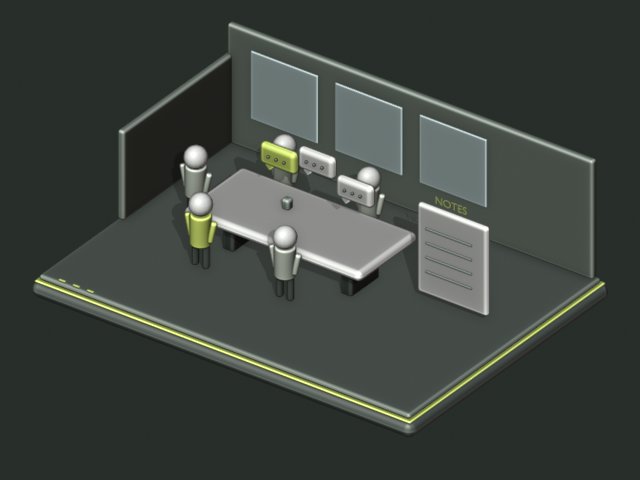
The same information is reconstructed in each status meeting.
Context travels forward. The scenario reserves one focused review.
Change the scenario assumptions +
Calculation: meetings × minutes per meeting − one focused review. This compares meeting duration, excludes preparation and operating costs, and assumes the repeated status meetings can be replaced. It is not a causal estimate or a measured outcome.
THE STRUCTURE BEHIND THE SCENARIO
Context is connected.
Intelligence should be too.
Ontology and relational intelligence give both lanes their context. Follow a source through the shared model, the question, the response, and the controls that govern what can happen next.
Facts become context
through their connections.
The ontology defines what things are and how they relate. Relational intelligence follows those supported relationships to understand who owns the work, what it affects, and which evidence belongs in the next question.
ILLUSTRATIVE PROGRAM · SELECT AN ENTITYVisual-search launch
The project brings the commitment, engineering change and KPI context together. Relational intelligence follows these links to frame a useful question.
Trace into both intelligence lanes- Update package belongs to Visual-search launchProject scope
- PR #42 changes Visual-search launchPR project link
- Visual-search launch measured by Request-match KPIProgram KPI definition
THE COMPLETE TPLLM ARCHITECTURE
One foundation. Two intelligence lanes.
Explicit control over action.
Select any block to highlight its upstream context and downstream dependencies.
DECISION QUESTION / JEVWhich supported risk family fits?
REASONING QUESTION / STRUCTURED OUTPUTSWhich causes interact across this launch, and what remains unknown?
Architecture and governance map. In the current Phase 2 implementation, the two lanes produce journaled artifacts for Intelligence Review. The arrows describe relationships and governance order, not automatic execution. Existing Phase 1 insight candidates use validate_insight(); TPLLM policy and separate authority controls govern external action.
BUILT TO KEEP THE EVIDENCE CLOSE
Jev judges. Reasoning synthesizes.
TPLLM governs.
SERIOUS
ABOUT PLAY.
Helped run a six-figure Fortnite UEFN map. Engineered gameplay, shaped map strategy around player retention, and managed brand deals.
Fortnite / UEFN
INTERACTIVE WORLDS · VERSE · PRODUCT
using { /Fortnite.com/Devices }

arena_loop := class(creative_device):
  OnBegin<override>()<suspends>:void =
    Print("Let’s build something worth playing.")
Built and shipped game modes, NPC behaviors, spawn logic, and player interaction loops in Verse. Tuned gameplay under live-user conditions.
CREATIVE GENERATION / ARCHIVE
Imagination,
made visible.
As an early DALL·E artist contributor and creative tester, I explored prompt sensitivity, controllability, and visual storytelling. Created as @sphoenixai for OpenAI social co-posts.
Visit the creative archive
CREATIVE EXPLORATIONS ON INSTAGRAM
 VIEW ORIGINAL
Winter, imagined.
@sphoenixai · 2022 VIEW ORIGINAL
A softer kind of wild.
@sphoenixai · 2022 VIEW ORIGINAL
Small hero. Big world.
@sphoenixai · 2022FROM THINKING TO BUILDING
 Unreal Engine
 TypeScript
 Python
 React
 Three.jsOpenAI
THINK THROUGH IT WITH ME
Ask the right question.
A shelf count is a signal. The real question: which drinks can this store actually fulfill?
Choose 01–04 to build the ontology.SCROLL TO BUILD THE NEXT LAYER
A counted item becomes a dependency: SKU, quantity, expiry, and the recipes that require it.
LOOKS RIGHT.
IS IT?
In my field guide, How to Catch a World Model Lying to You, I explain how SC3-Eval checks whether a simulated robot is still following its commands. Catching that mismatch helps engineers evaluate a robot’s behavior without mistaking convincing video for trustworthy evidence.
TRY IT Slide through this example. When the dashed action inferred from the video separates from the yellow command, the simulated rollout is no longer trustworthy.
HOW TO CATCH A WORLD MODEL LYING TO YOU
“A score that ranks hands them a leaderboard. A witness that names the failure hands them a lead.”Read my field guide
SAME INSIGHT. DIFFERENT LENS.
Complexity, translated.
RESEARCH / THE RELIABILITY KILL CHAIN
How does a wrong answer
become accepted reality?
I wrote The Reliability Kill Chain to ask how AI-generated compliance could be trusted at the Department of War (DoW). Building on Princeton University’s AI-agent reliability research, I trace how one unsupported security claim can pass review, authorize a system, and spread to others—and propose evidence checks to interrupt it.
Research foundation: Stephan Rabanser, Sayash Kapoor & colleagues · Princeton University
TRY IT Choose a stage, then “Break the chain” to see the proposed safeguard that could stop the error before it becomes a security gap.
STAGE 1 OF 7
The wrong evidence gets in.
A poisoned or outdated source enters the knowledge base.
Choose a stage. Reveal the safeguard that interrupts it.